Rolling Forecasts vs Annual Budgets: What Your Limited Company in Qatar Needs in 2026 |
||||||||||||||||||
|
||||||||||||||||||
|
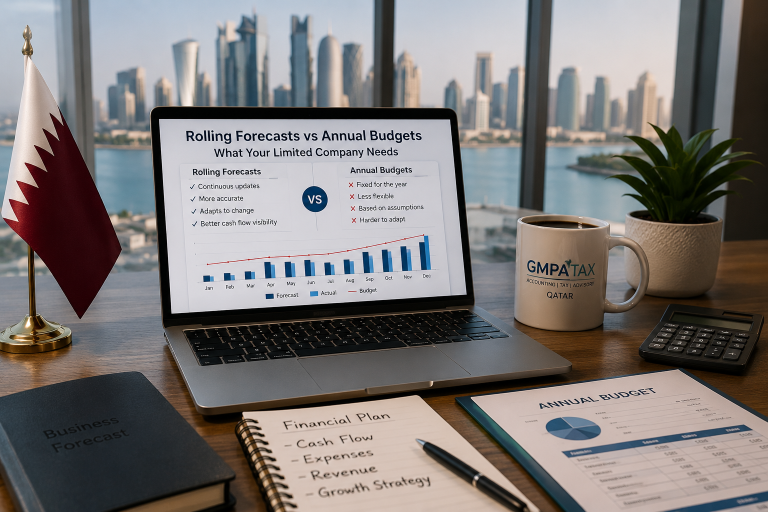
A rolling forecast updates every month or quarter and always looks a fixed number of months ahead, while an annual budget is fixed for the full financial year and only reviewed once that year ends. Most limited companies trading in Qatar get the best results from running both together, an annual budget for board sign off and UK reporting, and a rolling forecast for day to day decisions in a market that moves quickly. If your company operates across Doha and the UK, the rolling forecast is usually the tool that flags a problem first. A rolling forecast is a continuously updated financial projection that adds a new period each time one closes, typically covering the next 12 months. An annual budget is a fixed 12 month financial plan agreed once a year and held constant until the next planning cycle begins.
|
||||||||||||||||||
|
||||||||||||||||||
What Is the Difference Between a Rolling Forecast and an Annual Budget?An annual budget is built once, usually in the months before your financial year starts, and it stays in place regardless of what actually happens once trading begins. A rolling forecast is rebuilt on a set cadence, most commonly monthly or quarterly, and it always projects forward a fixed number of months from today rather than counting down to a fixed year end. The table below sets out the practical differences a limited company owner in Qatar should understand before choosing an approach. |
||||||||||||||||||
|
||||||||||||||||||
Why Do Limited Companies in Qatar Need Both Rolling Forecasts and Annual Budgets?Qatar’s economy is closely tied to hydrocarbon revenue and large scale infrastructure and events driven spending, which means demand for services, construction, hospitality and professional support can shift faster than a UK company owner might expect from a purely domestic business. An annual budget still matters because it sets the number your bank, your board or your UK parent company signs off, and it remains the reference point for year end statutory accounts. A rolling forecast matters because it tells you, this quarter, whether that original number is still realistic. Most limited companies operating out of Doha find that neither tool alone is enough. The annual budget gives structure and discipline, while the rolling forecast gives an honest, current view of cash position, staffing needs and whether a planned expansion into a new district is still affordable. |
||||||||||||||||||
How Does Qatar’s Economic Outlook Affect Your Budgeting Approach in 2026?According to the IMF’s 2026 Article IV mission to Qatar, economic growth recovered to 2.4 percent in 2024, strengthened further to around 3 percent through the third quarter of 2025, and is expected to average around 4 percent in the medium term, supported by expanding LNG production and continued non hydrocarbon reform under the Third National Development Strategy. For a limited company owner, that pace of change means the assumptions built into a January budget can be out of date by June. A rolling forecast lets you fold in new information as it appears, rather than waiting for the next annual cycle. This matters differently depending on where in Doha your business is based. A firm signing new office space in West Bay or Lusail is facing different rent and staffing cost trends to one operating from The Pearl or Msheireb, and a rolling forecast updated quarterly is far better at catching those local cost shifts than a budget fixed twelve months in advance. |
||||||||||||||||||
When Should a British Expat Owned Company Switch to Rolling Forecasts?There is rarely a single moment to abandon the annual budget entirely, and for most British expat owned companies we would not recommend doing so. Instead, watch for these signals that a rolling forecast needs to sit alongside it: |
||||||||||||||||||
|
||||||||||||||||||
How Do UK Tax Obligations Affect Forecasting for British Expats in Qatar?Many of our clients still hold a UK limited company alongside their Qatar operation, whether that is a holding structure, a UK trading entity, or property income left behind. A rolling forecast built only around Qatar cash flow misses UK filing deadlines, dividend timing and any residual UK corporation tax exposure that a purely local forecast would never flag. If your UK entity is scaling as well as your Qatar one, it is worth reading our guidance on advisory support for scaling limited companies in the UK, which sets out the compliance side that should feed into any forecast you build in Qatar. |
||||||||||||||||||
How Can GMPA LLC Help You Build a Rolling Forecast or Annual Budget in Doha?GMPA LLC serves clients across Doha and the wider Qatar market, and supports British expats with continuing UK tax obligations alongside their local reporting needs. We build annual budgets for board and statutory purposes, then layer a rolling forecast on top so you always have a current, honest view of cash position without waiting for the next financial year to start. If you have not yet built your first annual budget, our step by step guide on how to build an annual budget for your limited company in Qatar is the right place to start before adding a rolling forecast on top of it. |
||||||||||||||||||
Frequently Asked Questions
|
||||||||||||||||||
|
||||||||||||||||||
|