How to Identify Financial Risks Before They Become Problems: A Guide for Businesses in Doha and Qatar |
||||||||||||||||||
|
Written by Saira Khan, 2026. Co-Founder of GMPA LLC, whose team has 15+ years of UK accounting experience advising British expats and SMEs operating across the UK and Qatar. |
||||||||||||||||||
|
If you run a business in Qatar, the honest answer is this: financial risk rarely appears without warning. It builds quietly through unreconciled accounts, slow paying clients and stretched cash flow, then surfaces all at once. Spotting it early means watching a small set of numbers every month rather than reviewing everything once a year. Financial risk is the possibility that a business will lose money, run short of cash or fail to meet an obligation because of market changes, poor internal controls, credit exposure or regulatory shifts. Identifying it early allows an owner to act while options are still available, rather than reacting under pressure. |
||||||||||||||||||
|
||||||||||||||||||
What Are the Most Common Financial Risks Facing Businesses in Qatar?Most businesses operating in Doha and across Qatar encounter the same handful of risks, though the mix depends on sector. Retail and hospitality tend to feel currency and supplier cost pressure first. Construction and contracting businesses feel client payment delays most acutely, often tied to project milestones. Professional services firms tend to face concentration risk, where a small number of clients make up most of revenue. Underneath all of these sits a quieter risk: weak financial controls that let errors and fraud go unnoticed for months. Our article on how weak financial controls lead to fraud and financial losses covers this pattern in detail.
|
||||||||||||||||||
How Can You Tell If Your Business Has a Financial Risk Problem?A business rarely fails because of one bad month. It fails because a pattern is ignored for two or three quarters in a row. The clearest signal is a gap between reported profit and actual cash in the bank. A company can look profitable on paper while its bank balance quietly shrinks because customers are paying later each month. Other reliable signals include rising supplier debt used to cover short term gaps, repeated last minute borrowing to make payroll, and reconciliations that keep slipping by a week or more. None of these are dramatic on their own. Together, they are an early warning system. |
||||||||||||||||||
What Early Warning Signs Should Doha Business Owners Watch For?Qatar’s business districts each carry a slightly different risk profile. Firms based around West Bay and Lusail, where many corporate headquarters and financial services offices sit, tend to deal with larger contract values and longer payment cycles, so a single delayed invoice can distort monthly cash flow significantly. Businesses in The Pearl and Msheireb, with a strong concentration of retail, hospitality and lifestyle brands, are more exposed to seasonal demand swings and rising import costs. Across all districts, the same early indicators apply: an increasing average collection period, inventory that grows faster than sales, and monthly variances against budget that keep being explained away rather than investigated. For a wider look at how process discipline reduces these exposures, see reducing financial risk through better business processes. |
||||||||||||||||||
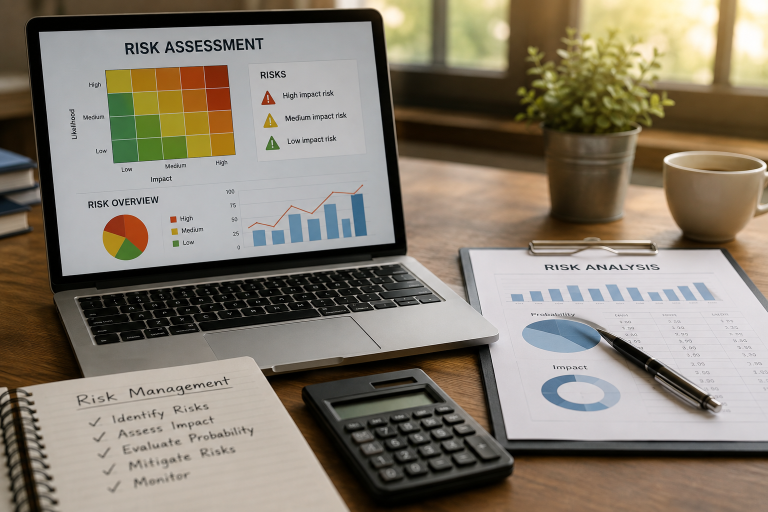
How Do You Carry Out a Financial Risk Assessment in Qatar?A practical assessment does not need to be complicated. It works through four stages: list every risk relevant to the business, estimate how likely each one is and how much damage it could cause, decide which risks the business can tolerate and which need immediate action, then assign an owner and a review date to each one. Businesses often confuse this exercise with an internal audit. They serve different purposes. Our comparison, internal audit vs financial health check: what’s the difference, sets out when each approach is the right tool. |
||||||||||||||||||
What Tools and Reports Help Identify Financial Risk Early?The table below sets out the five reports that catch most financial risk early, along with the warning sign to watch for and the action a business owner in Qatar should take. |
||||||||||||||||||
|
||||||||||||||||||
How Does Qatar’s Regulatory Environment Affect Financial Risk Management?Regulatory risk sits alongside operational and market risk for any business in Qatar. Entities registered with the Qatar Financial Centre (QFC) must prepare financial statements under internationally recognised accounting standards, and firms across the wider GCC are under growing pressure to strengthen governance, documentation and anti money laundering controls in line with Qatar Central Bank (QCB) expectations. This matters beyond compliance. The International Monetary Fund’s 2025 analysis of Qatar’s financial conditions found that financial conditions are a leading indicator of the country’s non hydrocarbon growth, which means tighter credit conditions locally can affect SME cash flow before they show up in a business’s own figures. A financial risk review in 2026 should factor in these wider conditions rather than looking only at internal numbers. |
||||||||||||||||||
What Should British Expats Running Businesses in Qatar Know About UK Tax Risk?Financial risk for a British expat in Qatar is not limited to the Qatar entity. Many expats retain UK rental property, pension contributions, or a UK registered company alongside their Qatar business, and each carries its own reporting obligation. Missing a UK self assessment deadline, misjudging tax residency status, or failing to declare Qatar sourced income correctly can create a UK tax liability that surfaces years later with interest attached. GMPA LLC supports clients across Doha and the wider Qatar market while also managing continuing UK tax obligations, so British expats get one coordinated view of their financial position rather than two disconnected sets of accounts. |
||||||||||||||||||
How Can GMPA LLC Help Identify and Manage Financial Risk?Our team works with SMEs and British expats across Doha, West Bay, The Pearl, Lusail and Msheireb to build a monthly reporting routine that surfaces risk early rather than at year end. This includes a full financial systems review for businesses that suspect their current setup is not giving them an accurate picture. See our related service, business financial health check and financial systems review in Qatar, for a closer look at how that process works. |
||||||||||||||||||
Frequently Asked Questions |
||||||||||||||||||
|
||||||||||||||||||
|
||||||||||||||||||
|
GMPA LLC. Doha, Qatar. Supporting British expats and SMEs across Doha and the wider Qatar market, alongside continuing UK tax obligations. 2026. |